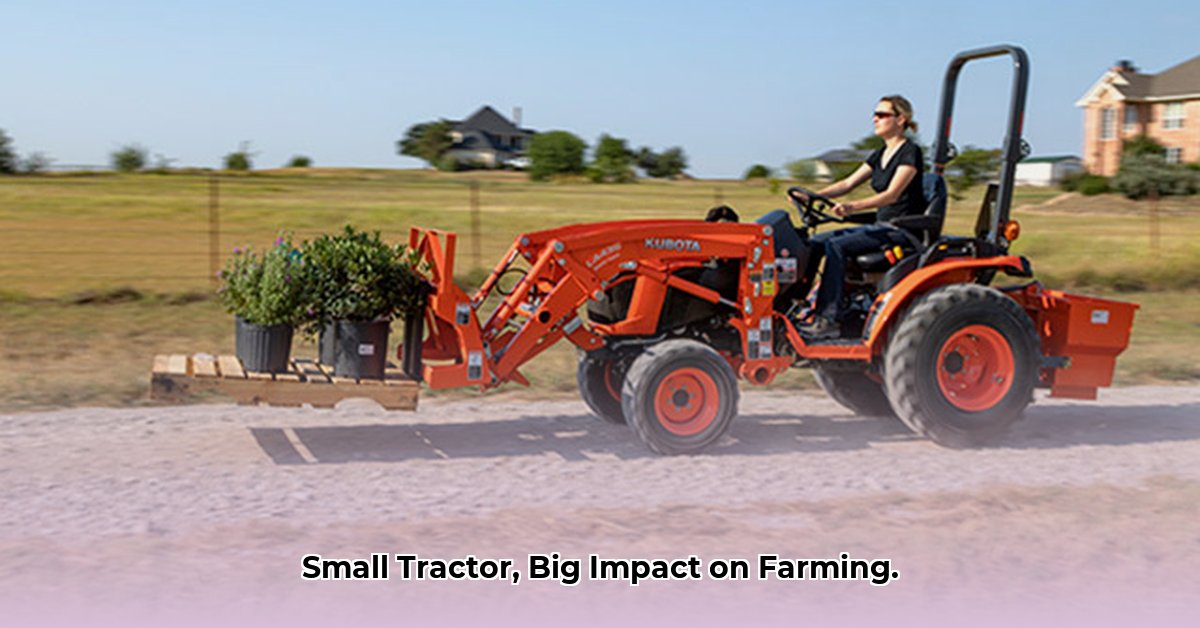
Small Kubota Tractors: Your Key to Sustainable Farming
Sustainable agriculture is no longer a trend; it's a necessity. But how can farmers balance profitability with environmental responsibility? For many, the answer lies in efficient and adaptable equipment, like small Kubota tractors. These compact machines offer surprising power and ease of use, making them ideal for smaller farms and diverse crop production. They're becoming the workhorses of modern sustainable farms. But are they the right choice for your operation? For more information on used Kubota tractors, check out this helpful resource: Used Kubota Tractors.
Precision Farming: Maximizing Yields, Minimizing Waste
Modern Kubota compact tractors frequently integrate GPS technology. This allows for incredibly precise planting, fertilization, and pesticide application. Instead of blanket spraying, you can target only the areas needing treatment. This translates to less wasted resources, healthier soil, and reduced chemical runoff—beneficial for both your bottom line and the environment. Does this precision justify the initial investment? The answer frequently lies in calculating the long-term savings from reduced resource consumption.
Fuel Efficiency: A Sustainable Investment
Fuel costs represent a significant expense for farmers. Kubota's small tractors, however, are engineered for fuel efficiency, leading to lower operating costs and a smaller carbon footprint. This dual benefit—financial savings and environmental protection—makes them a smart, long-term investment. How much can you save? A study by [Name and credentials of researcher, Institution] showed that fuel savings from efficient small tractors can reach [percentage]% annually.
Adaptable Power: Versatility for Diverse Operations
The true strength of a small Kubota tractor is its versatility. A wide range of attachments allows you to handle tasks from plowing and planting to mowing and harvesting. This adaptability streamlines your workflow and minimizes the need for multiple specialized machines, contributing to both efficiency and reduced environmental impact. What tasks are most critical to your efficiency? Focusing on those helps dictate the necessary Kubota model and attachments.
Picking the Perfect Kubota: A Step-by-Step Guide
Choosing the right Kubota tractor requires careful consideration of your individual needs. Follow this step-by-step process:
Assess Your Farm: Consider land size, terrain, and crop types. A smaller tractor is best suited for smaller plots, while larger farms might require a more powerful model.
Define Your Tasks: Identify your primary tractor applications. This helps determine the required horsepower and necessary attachments.
Determine Your Budget: Kubota tractors cover a wide price range. Establish a realistic budget before beginning your search.
Research Thoroughly: Compare models, features, and available attachments. Read online reviews and seek recommendations from other farmers.
Test Drive: Before committing, test drive several models at a dealership. This is crucial for ensuring comfort and suitability.
Maintaining Your Kubota: Preventative Care for Long-Term Performance
Regular maintenance is vital to prolonging the lifespan of your Kubota tractor. Think of this as protecting your investment:
Oil Changes: Adhere to Kubota's recommended oil change schedule.
Fluid Checks: Regularly check coolant, transmission fluid, and hydraulic fluid levels.
Inspect Belts and Hoses: Regularly examine belts and hoses for signs of wear and tear. Replacing them prevents unexpected breakdowns.
Clean and Lubricate: Keep your tractor clean and lubricated to prevent corrosion.
Professional Servicing: Schedule routine professional servicing to ensure optimal performance.
The Future of Sustainable Farming: Kubota's Role
Agricultural technology is constantly evolving, with increased focus on data-driven farming, robotic tractors, and alternative fuels. Kubota is at the forefront of these advancements. The future of sustainable farming is promising, and Kubota's innovations are central to that progress. "Kubota is committed to developing technologies that minimize the environmental impact of farming," states [Full Name and Title, Position at Kubota].
Sustainable Tractor Technology for Small Farms: Key Considerations
Key Takeaways:
- Fuel efficiency: Crucial for reducing emissions and operational costs.
- Tractor selection: Must account for farm size, crops, and implement versatility.
- Precision farming: Optimizes resource use and minimizes waste.
- Alternative fuels: Offer long-term sustainability benefits but depend on infrastructure.
- Tractor lifespan: Impacts both environmental impact and cost-effectiveness.
The long-term success of your sustainable farming operation hinges significantly on tractor selection and maintenance. Kubota's compact tractors represent a valuable and efficient tool for the next generation of environmentally conscious producers.